
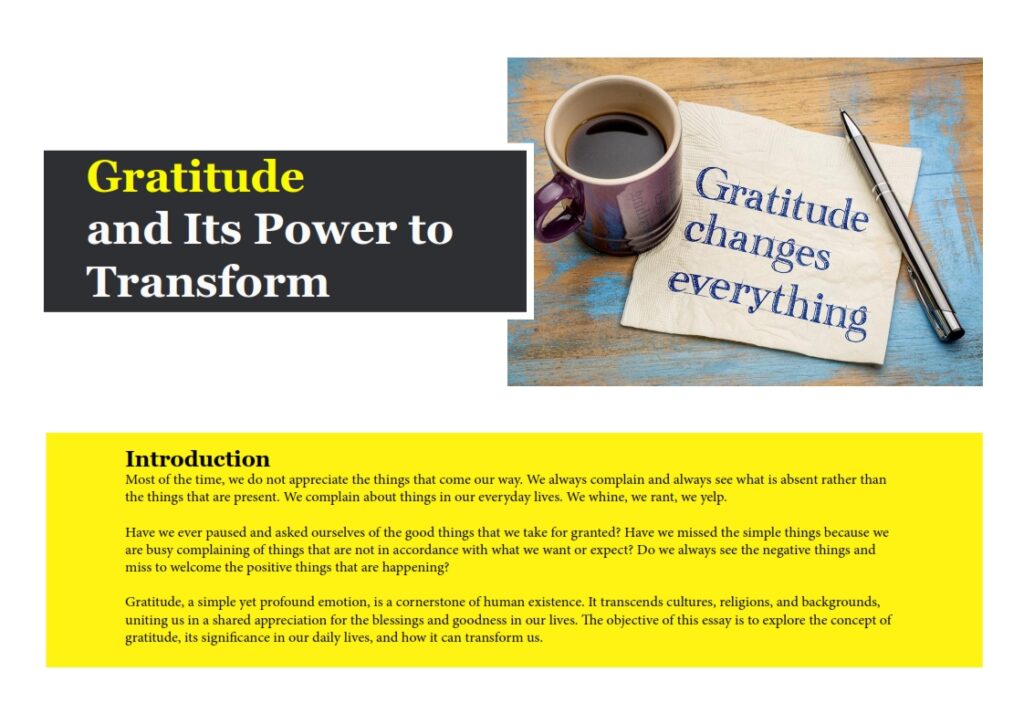
Most of the time, we do not appreciate the things that come our way. We always complain and always see what is absent rather than the things that are present. We complain about things in our everyday lives. We whine, we rant, we yelp. Have we ever paused and asked ourselves of the good things that we take for granted? Have we missed the simple things because we are busy complaining of things that are not in accordance with what we want or expect? Do we always see the negative things and miss to welcome the positive things that are happening? Gratitude, a simple yet profound emotion, is a cornerstone of human existence. It transcends cultures, religions, and backgrounds, uniting us in a shared appreciation for the blessings and goodness in our lives. The objective of this essay is to explore the concept of gratitude, its significance in our daily lives, and how it can transform us.

What is Gratitude?
Gratitude is defined as the heartfelt acknowledgment of the benefits, kindness, and positive aspects of life, along with a deep sense of appreciation for them. It is the recognition that we have received something valuable from someone or something beyond ourselves, and it instills a sense of humility and thankfulness. An attitude of gratitude is having a conscious habit of expressing appreciation on a regular basis for big and even small things alike. Being grateful is the act of expressive pleasure or gratitude for something that we receive.
Grateful or Thankful?
Maybe you are using the terms grateful and thankful interchangeably and I cannot blame you. Most people tend to do so but there is a great difference between the two terms. Knowing the difference between being thankful vs being grateful will change your life in many ways. Sounds awesome? Let us first differentiate being thankful from being grateful. In an article from the website Our Father’s House Soup Kitchen which is a non-profit organization based in Pompano Beach, Florida, there are several differences between being thankful and being grateful.
1. Being grateful is an act while being thankful is a feeling or state of being.
To be grateful is to express gratitude to someone for something they have done or given. On the other hand, being thankful is the feeling of relief or happiness over something. Being grateful is an act that needs to be expressed; whereas being thankful is a feeling. Being grateful comes from a much deeper plane.
2. Gratefulness is aimed at another person while thankfulness is mostly intended for yourself.
Simply put, being grateful can make somebody feel good but being thankful makes yourself good.
3. Thankfulness precedes gratefulness.
One cannot give something that he does not have. The same goes in expressing gratitude. Gratitude transcends thankfulness.
How Gratitude affects everything
Alex Korb, a neuroscientist and author of the book The Upward Spiral has beautifully connected how gratitude affects one’s overall happiness. He further described how gratitude boosts the neurotransmitter dopamine. I would like to quote an excerpt from his book:
“Everything is interconnected. Gratitude improves sleep. Sleep reduces pain. Reduced pain improves your mood. Improved mood reduces anxiety, which improves focus and planning. Focus and planning help with decision making. Decision making further reduces anxiety and improves enjoyment. Enjoyment gives you more to be grateful for, which keeps that loop of the upward spiral going. Enjoyment also makes it more likely you’ll exercise and be social, which, in turn, will make you happier”

The Transformative Power of Gratitude
Gratitude has the remarkable ability to transform our lives in several ways:
- Perspective Shift: Gratitude encourages us to shift our perspective from a mindset of scarcity to one of abundance. Instead of constantly wanting more, we learn to appreciate what we have. This shift can lead to greater contentment and happiness.
- Empowerment: Gratitude empowers us to take control of our emotions and reactions. It reminds us that we have the power to choose how we interpret and respond to situations, allowing us to maintain a positive outlook even in difficult circumstances.
- Strengthening Relationships: Expressing gratitude strengthens our relationships by fostering trust, openness, and mutual respect. It creates a positive feedback loop where acts of gratitude lead to more kindness and generosity
- Increased Generosity: Grateful individuals are more likely to pay forward the kindness they receive. This creates a ripple effect of goodwill in society, making the world a better place for all.